EUAFA

EUROPEAN AIR FORCE ACADEMIES

   PORTUGAL


PORTUGUESE AIR FORCE ACADEMY (POAFA)

The Portuguese Air Force Academy (PoAFA) was created on 27 January 1978 to enable the Portuguese Air Force to prepare its own commissioned officers. PoAFA facilities are attached to Air Base 1, at Granja do Marquês, north of Sintra. The first course at PoAFA started on February 1st, 1978, only with air force pilots students.

The Aeronautical Engineering, Airfield Engineering, Electrical Engineering and Aeronautical Administration course started later, in 1991. In the same year, PoAFA started Bachelor degrees to allow personnel from the ranks under short-term contract and NCOs to become commissioned officers.

The Aeronautical Studies Centre was established in 2006, with the mission to provide complementary training courses for military personnel. The Centre is currently responsible for the Basic Command Course (Captain promotion course) and the Chief Master Sergeant Promotion Course.

As a public military higher education institution, AFA takes part in several national and international scientific research projects, in cooperation with several public and private organisations, through the Air Force Academy Research Centre.


 Commander

  COMMANDER
  Major General
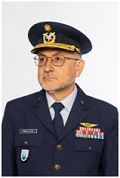
  Fernando COSTA


Major-General Fernando Costa was born in Lisbon on 22 December 1967. He joined the Portuguese Air Force Academy in 1987 and graduated in Military and Aeronautical Sciences, specializing as Pilot-aviator, in August 1992, after completing his training and earning his wings flying the Epsilon TB-30 aircraft, at Air Base N.º1, in Sintra.

Following, between September 1992 and April 1993, he attended the Complementary Piloting Course for Combat Airplanes, at Air Base N.º11, in Beja, in a T-38 Talon aircraft, in Squadron 103.

In his operational career, he held numerous posts and obtained various qualifications in the flight squadrons he joined, including instructor pilot in Chipmunk, Epsilon TB-30, Cessna 142, Alpha-Jet and F-16A aircraft, as well as operational pilot in the Alpha-Jet and F-16A aircraft. During this period of his operational life, he participated in the "Red Flag" exercise at Nellis Air Force Base, Las Vegas, in the United States, in 2000 and in “Tactical Leadership Course” at NATO School, Florennes, in Belgium.

Regarding command and leadership functions, he commanded the 301 Squadron "Jaguares", the Operations Center of Operational Group N.º 111 at Beja Air Base, the Air Operations Center of the Air Command, the Air Force Academy Students Corps and Air Base N.º 11, in Beja.

As for his experience in international organizations, between 2006 and 2010 he held the positions of Ops Defense Fighter and Duty Controller at the Combined Air Operations Centre 8 (CAOC 8), in Madrid and between 2022 and 2024 he held the positionof Director of the Combined Air Operations Center Torrejón (CAOC T), also in Madrid, position he held before his current appointment.

Concerning, NATO's collective defense, in 2012, he commanded a detachment of F-16A, in Keflavik, Iceland, with the purpose of ensuring air policing/air defense in that state's area of responsibility.

In addition to his career courses, Major-General Fernando Costa, holds several national and NATO courses and specializations, including the National Defence Course at National Defence Institute, the “NATO Staff Officers Orientation Course” at the NATO School in Oberammergau, Germany and the “JFAC Leadership Seminar” at CASPOA, in Lyon, France.

Major General Fernando Costa has logged over 3,000 flight hours, mostly in jet aircraft. He is co-author of the article "Building an Aerial Firefighting Capability in the Portuguese Air Force" published in the journal of military sciences in November 2020, and the chapter "Synthesis and outlook" in the book "Strategic Challenges for Portugal in the Post-Covid-19 Era".

Major-General Fernando Costa’s service record includes several commendations and decorations, including the Military Order Medal of Avis, Grade of Commander, five Silver Medals for Distinguished Service, 1st and 2nd Class Military Merit Medals, 2nd Class Saint George’s Cross Medal, 1st Class Aeronautical Merit Medal and the Gold Exemplary Behavior Medal

Major-General Fernando Costa is married and has two children.


  Structure

The Portuguese Air Force Academy (PoAFA) is both a military unit and a higher education establishment which mission is to provide education and training to the future Portuguese Air Force commissioned officers. Providing a kind of instruction which is unique in Portugal, the AFA currently offers both undergraduate and graduate degrees focussed on academic education, military and sports training and aeronautical knowledge and culture.

The Masters’ degrees provided at AFA – namely, Air Force Pilot; Aeronautical Engineering; Airfield Engineering; Aeronautical Administration, and Medicine – are officially recognised as university degrees. Besides scientific curricular units, all degrees include 60 ECTS on military subjects, as well as military and sport training, which are extracurricular activities.

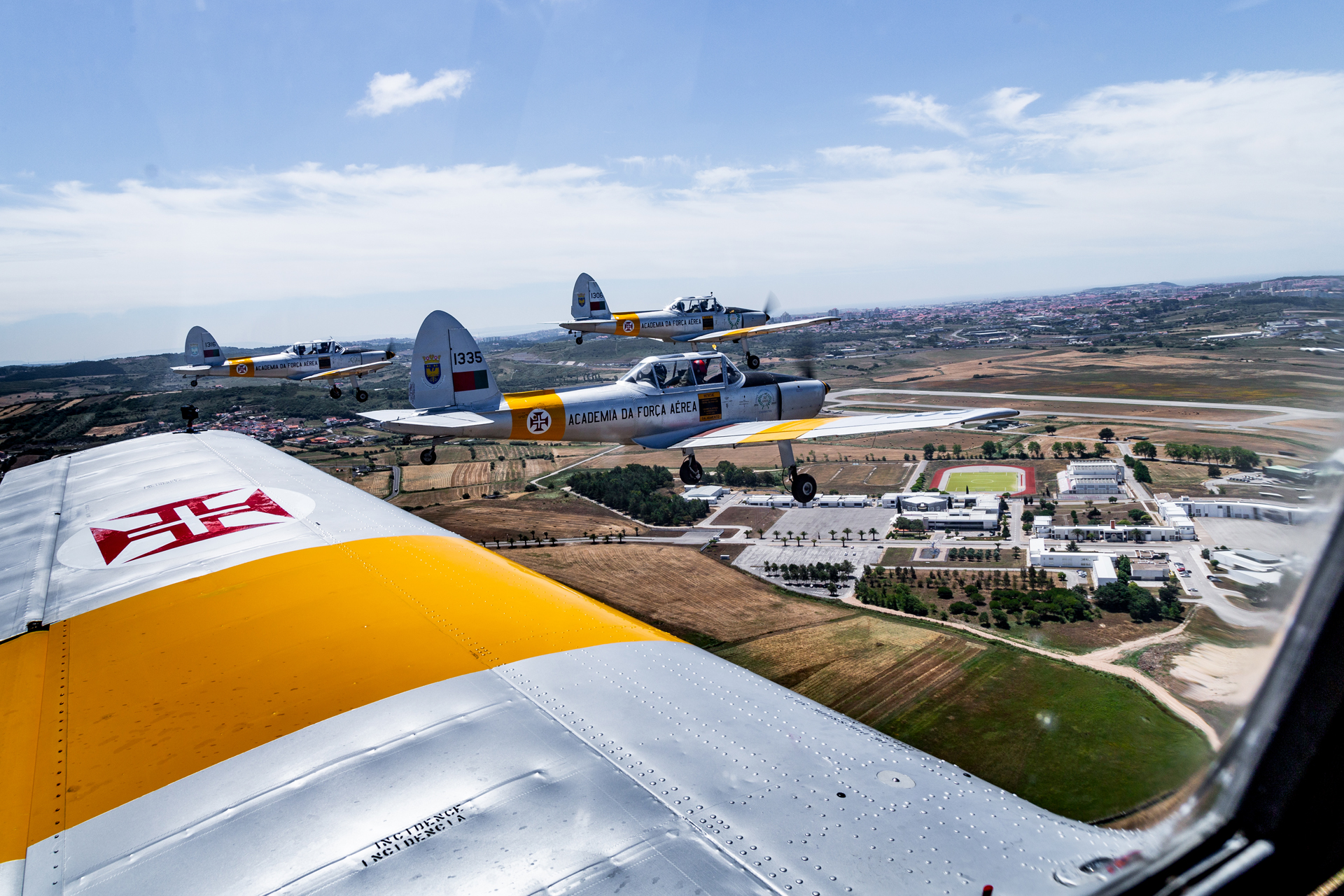
Air Force Pilot Students do all their education at PoAFA and Portuguese Air Force Squads. Pilots’ master degree is a five and a half years course, including one year piloting course. In the first four years, pilot students fly about 45 hours on the aircraft DHC-1 Chipmunk. After the masters’ thesis, on the last year, pilots students fly the aircraft Aerospatiale Epsilon TB-30 during elementary and basic training..

Engineering and administration students, apart from the course units taught at PoAFA, also attend course units at Instituto Superior Técnico (IST, Lisbon) and Instituto Superior de Economia e Gestão (ISEG, Lisbon), respectively. They spent the first three years at the PoAFA, where. After the third year, they go to our civilian universities partners to finish the bachelor degree and ingress in the master degree.

Medicine students do all their scientific education at the Faculty of Medicine of the University of Lisbon.

The undergraduate degrees are essentially training programmes for technical officers who are under short-term contract to the Air Force and want to become commissioned officers.

PoAFA also offers a post-graduation on Aeronautical Medicine, available for military and civilian medical doctors.

  Contact

Address

  • Granja do Marquês
  • 2715-021 Pêro Pinheiro, Sintra
  • PORTUGAL

Phone numbers,Fax, Email


Web Page

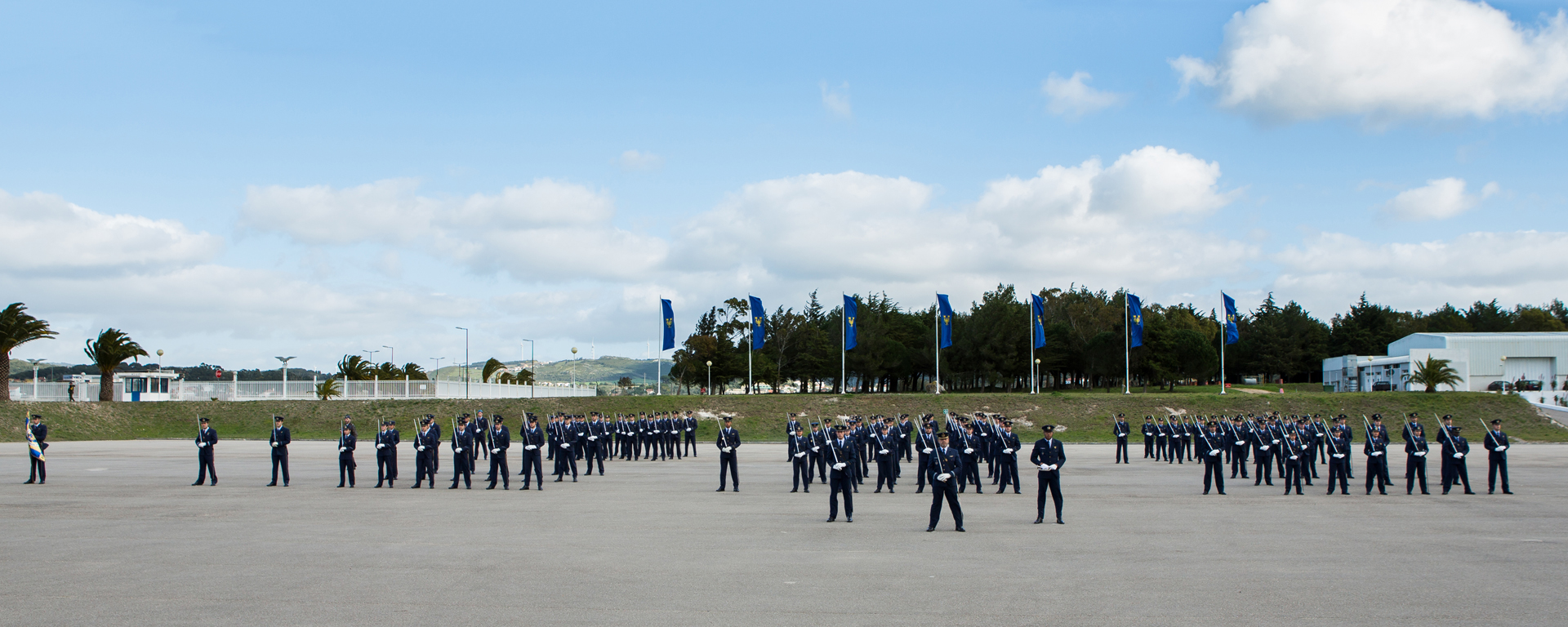
 Images from Academy


 Commandant’s Conference

In 1993 the European Air Chiefs Conference (EURAC) was established with the main objective finding new methods of study and co-operation among European Air Forces – within and out of NATO. In this context a considerable importance has been given for a common vision in the ways of education and formation of future officers

Consequently the European Air Force Academies (EUAFA) Commanders’ Conference has been established as a forum of experts in order to exchange information, co-operate and identify areas of common interest to carry out activities, with the largest possible participation of all the member nations, in the field of officer education and training.

EUAFA mission is to encourage mutual education through the sharing of information on officer training by promoting academic and military exchanges concerning cadet and instructor training.

The (EUAFA) Commandants’ Conference comprises of the Commandants of the Air Force Academies of the following European countries:

AUSTRIA, BELGIUM, CZECH REPUBLIK, DENMARK, FINLAND, FRANCE, GERMANY, GREECE, HUNGARY, IRELAND, ITALY, NETHERLANDS, NORWAY, POLAND, PORTUGAL, ROMANIA, SPAIN, SWEDEN, SWITZERLAND, TURKEY, UNITED KINGDOM.

The members of the conference annually elect a Chairman, who is responsible for the preparation of the meetings and who acts as Point of Contact (POC) for all members.

The Chairman, who is appointed for one year for the period between two Commandants’ Conferences, is the Commandant (or his representative) of the Academy that is designated to host the conference at the end of his term.

Experts’ Working Group

In order to find common elements within the syllabi of the EUAFAs a Working Group was established in 1998. The ultimate goal was to identify portions of the individual training and education programs that might be suitable for common training and/or mutual exchanges

The EUAFA Working Group is responsible for the following tasks: view the member nations syllabi and focus on common fields within which to provide a basis for future co-operation in training and cadet exchanges; gather, update and disseminate the Databank (available at the website, and updated by the appropriate Working Group member) containing:

  • An overview of educational systems.
  • The structure organisational diagram of each participating country.
  • The educational syllabus of each academy.
  • The pilot education, training and timeframes in each academy.

In order to achieve a better understanding regarding main areas of training in each country’s officer training syllabus and from which common areas of interest could be found:

  • Discuss and prepare agenda items for the following EUAFA Commandants’ Conference
  • Present the findings of the Working Group Meeting including proposals for future activities to the following EUAFA Commandants’ Conference
 
Copyright © AFAHC.RO